Mega Cat Gaming News: The Hidden Cost of Features

For a long time, game development followed a pretty predictable mindset: more features meant more value. Bigger worlds. More systems. More mechanics. More progression. More everything.
But lately, more developers have started running into the same problem: adding more doesn’t make the game better, and in some cases, it starts making it worse.
That realization is quietly shaping a lot of modern game development right now, not just in design, but in production, leadership, and how studios decide what’s actually worth building in the first place.
The “Feature Ceiling” Realization
One of the biggest shifts happening across studios right now is the growing awareness of what some developers are calling the Feature Ceiling.
It’s the point where every new feature adds more complexity than actual value.
At first, adding systems feels exciting. More mechanics create more possibilities, more content, and more flexibility for players. But eventually, games can become overloaded. Menus get harder to navigate, progression becomes harder to balance, tutorials get longer, and the core experience starts losing clarity.
Developers like Jonathan Blow have talked for years about how overdesign can dilute the identity of a game. And now, more teams are actively responding to that idea by simplifying mechanics, cutting unnecessary systems, and focusing harder on what already works instead of endlessly expanding outward.
The conversation is shifting away from:
“What else can we add?”
And moving closer toward:
“What can we remove without losing what makes the game good?”
Tools Before Content
Another major shift is happening behind the scenes during early production. Instead of immediately building huge amounts of content, more studios are investing heavily in internal development tools first. That means:
- level editors,
- modular pipelines,
- automation systems,
- testing tools,
- and workflows designed to speed up production later on.
Journalists like Jason Schreier have repeatedly reported that production bottlenecks, not a lack of creativity, are responsible for delaying many modern games.
In other words, most studios don’t run out of ideas. They run into pipeline problems.
And as games grow larger, solving those workflow issues early becomes one of the most important parts of development. Players rarely see this side of development, but it often determines whether a project ships smoothly or struggles behind the scenes for years.
The Senior Bottleneck
Many studios are struggling with a shortage of senior developers. As projects scale up, experienced developers often end up responsible for an overwhelming number of critical decisions:
- code reviews,
- system architecture,
- technical approvals,
- pipeline oversight,
- and high-level design direction.
Developers like Cory Barlog have spoken openly about how leadership bandwidth becomes a real limitation as teams expand.
Because even if a studio doubles in size, decision-making doesn’t scale at the same speed. Eventually, too many tasks funnel through too few people and production slows down.
That’s pushing more studios to simplify workflows, empower mid-level developers, and reduce dependency on a handful of “key people” carrying the entire project. Because once bottlenecks form, momentum disappears fast.
Directors Back in the Trenches
At the same time, more creative directors are becoming directly involved in development again. Instead of staying focused purely on high-level vision, developers like Neil Druckmann and Hideo Kojima remain deeply connected to moment-to-moment design decisions throughout production.
Part of that comes down to how complicated modern games have become. The larger a project gets, the easier it is for vision to become fragmented across departments, teams, and production layers.
That’s why many studios are tightening feedback loops and keeping leadership closer to the actual development process. When directors stay involved, decisions happen faster, communication stays clearer, and the final product usually feels far more cohesive.
Good Enough to Ship
One of the hardest decisions in game development is figuring out when a game is actually finished. Technically, most games could keep evolving forever. There’s always another feature to add. Another system to improve. Another mechanic to tweak.
But more developers are embracing the idea of “Good Enough to Ship.” Not perfect. Not overloaded. Not endlessly iterated. Just stable, clear, and ready for players.
Developers like Tim Schafer have talked openly about the importance of actually shipping a game, even if that means leaving some ideas behind. Because eventually, endless iteration stops improving the experience and starts slowing development down instead.
And in modern production, iteration is becoming more expensive than ever.
Deep Dive: The Cost of Iteration
Iteration has always been one of the foundations of game development.
Test something.
Adjust it.
Rebuild it.
Repeat.
But as projects become larger and more expensive, that loop becomes significantly harder to sustain. Every redesign impacts:
- production schedules,
- animation,
- QA,
- engineering,
- level design,
- and sometimes entire pipelines.
Studios led by developers like Todd Howard have long emphasized iteration as a core part of development, but even that approach is becoming more difficult as production costs continue rising across the industry.
Because “we’ll fix it later” gets expensive very quickly.
That’s why more studios are trying to make stronger decisions earlier:
- more prototyping,
- more validation,
- and fewer systems built on uncertainty.
In a lot of ways, modern development is becoming less about adding endlessly, and more about choosing carefully.
Rapid Fire: The Discovery List
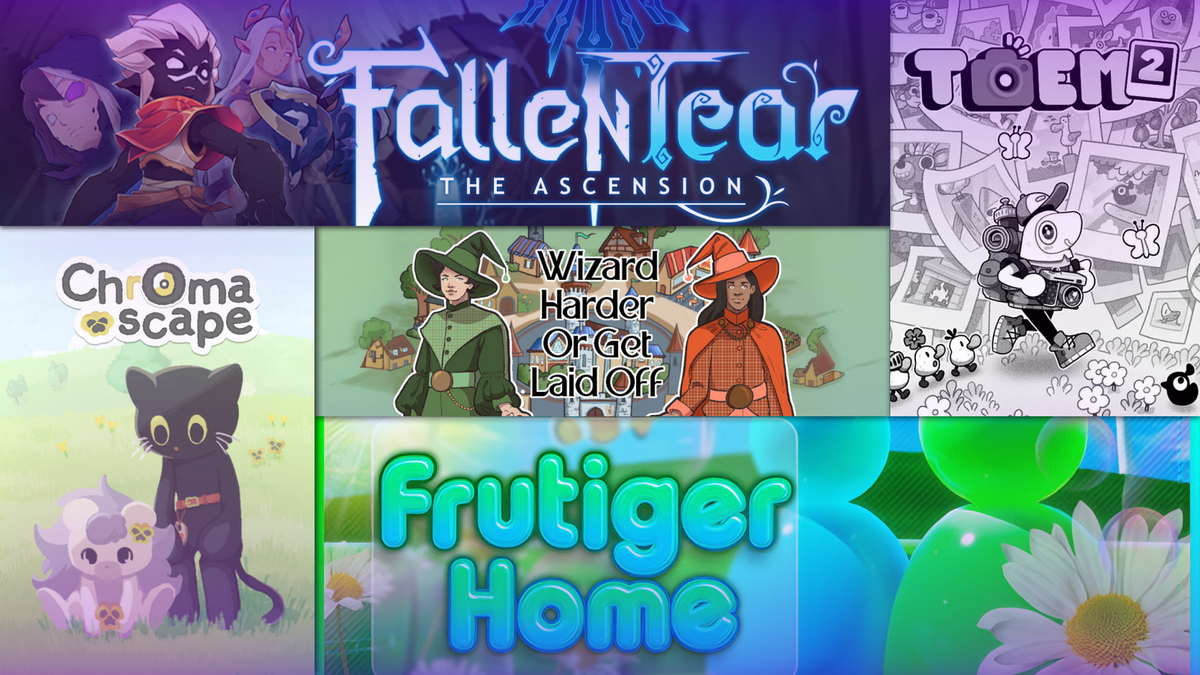
A few games featured in this week’s Mega Cat-alogue highlight how focused design, strong identity, and intentional scope continue shaping modern releases.
-
Hidden Things Beach Elves takes a relaxed approach to hidden object gameplay through hand-drawn beach environments packed with playful interactions and layered details.

-
Creepy Tale: Snow Child leans heavily into a dark fairy tale atmosphere, combining stylized visuals and puzzle-driven storytelling to create tension throughout the experience.

-
It Reaches builds psychological horror around shifting spaces, unsettling encounters, and a growing sense of paranoia.

-
Into the Restless Ruins mixes dungeon crawling with deckbuilding systems, allowing players to shape the ruins themselves as each run evolves.

-
And Subnautica 2 is already generating a lot of discussion around co-op survival design, exploration systems, and how the series plans to expand its underwater sandbox.

And if you want a deeper look at this week’s featured games and more indie discoveries, make sure to check out the latest Mega Cat-alogue feature here.
Right now, some of the biggest changes in game development aren’t happening on screen. They’re happening behind the scenes:
- fewer unnecessary features,
- smarter production workflows,
- tighter pipelines,
- and teams learning when to stop before complexity starts getting in the way.
Because sometimes, the smartest decision a developer can make… is deciding not to add something at all.
—
Watch the video here: