Mega Cat Gaming News: The Bigger Game Trap

We keep hearing about bigger games.
Bigger worlds. More content. More characters. More systems. More hours. More everything.
For a long time, bigger felt like the natural direction for games. Open worlds got larger, playtimes stretched longer, and maps filled up with quests, collectibles, crafting systems, skill trees, currencies, and a lot of other things to keep players busy. But here's the thing: does a game actually get better just because it gets bigger?
Some of the most interesting breakout games in recent years have gone in the opposite direction. They take one good idea, build around it, and resist the urge to pile on everything else. And that shift raises an interesting question for developers: how much game do you actually need to make?
The Bigger is Better Era
For years, bigger seemed like the obvious goal. If a game had a huge map, dozens of hours of content, hundreds of quests, and a long list of features, it felt like there was more value packed into it. Games gradually became larger and more ambitious, with some experiences turning into platforms that could keep players occupied for months.
And there's nothing inherently wrong with that.
There are plenty of players who genuinely love getting lost in a massive RPG or spending hundreds of hours building up a character. Scale can be part of the appeal.
The problem is that big comes with a price.
A larger game needs more people, more development time, more testing, more assets, more systems to maintain, and more money to keep everything moving. The bigger the project gets, the more there is to keep track of. At a certain point, you have to ask whether all that extra content is actually making the game more enjoyable.
Something Interesting Is Happening
While some games continue to chase scale, a different kind of success story has been popping up. Small teams are making games with straightforward concepts, focused mechanics, shorter development cycles, and surprisingly simple pitches. Games like PEAK, R.E.P.O., Schedule I, and Megabonk have shown how far a tightly scoped idea can go.
Unity's 2026 Game Development Report found that 52% of surveyed developers said market conditions had pushed their studios toward smaller, more manageable projects. That's a pretty interesting shift.
It doesn't mean developers suddenly stopped wanting to make ambitious games. It does suggest that smaller projects can offer a different path, especially at a time when development costs and timelines continue to grow.
Instead of asking, "How much can we put into this game?" developers can start with a different question: What's the one thing this game needs to do really well?
One Great Idea Can Be Enough
Think about how easy it is to explain certain breakout games.
"You climb together."
"You explore a haunted location with friends."
"You build a drug empire."
You don't need a presentation deck to understand the basic fantasy. The hook is right there. That's powerful. A game doesn't necessarily need fifteen interconnected systems or a giant lore bible before the player can understand why it sounds fun. Sometimes, one strong idea is enough to get someone interested. The rest of the game can then build on that idea.
It's a pretty simple concept, but it's also one that's easy to lose sight of when development gets bigger. Once a project has enough time and resources behind it, there's always another feature that could be added. And that's where things can get messy.
The Power of Focus
Every feature has a cost. A new mechanic needs design, programming, art, UI, audio, testing, balancing, and maintenance. Even a feature that looks small on paper can create a surprising amount of work once it becomes part of the actual game.
So what happens if you go the other way? What if you remove half of the features? Then half again? Eventually, you're left with the things that actually make the game feel like itself.
That's not necessarily cutting corners. It can be the opposite. Sometimes, cutting away everything that isn't essential is how you find the game hiding underneath all the extra stuff.
Small Doesn’t Mean Simple
Of course, a smaller game doesn't automatically mean a simpler game. A focused mechanic can create a ridiculous amount of depth when players have enough freedom to experiment with it.
Take a cooperative game with a straightforward objective. On paper, the rules might be incredibly simple. Then you put four friends in the same room, give them a problem to solve, and watch communication completely fall apart. Someone panics. Someone makes a terrible decision. Someone accidentally ruins the entire plan. And suddenly, you have a story.
That's one of the strengths of systemic design. You don't necessarily need hundreds of scripted events when your systems can create unexpected moments on their own. The game doesn't have to tell players what happened. Sometimes, the players create the story themselves.
The Player’s Time Matters Too
There's another side to this conversation, and it has nothing to do with development budgets. It's the player's time. Most people already have enormous backlogs. There are thousands of games to choose from, and there simply aren't enough hours in the day to play all of them.
So when a game comes along that says, "You can understand this in five minutes," that's pretty appealing. Not because players don't want long games. Plenty of people absolutely do.
Sometimes, you just want something you can pick up after work, play with friends for a few hours, and actually finish. You want to understand what you're doing without spending the first evening reading through menus and tutorials. A shorter game can make that easier.
Big Games Aren’t Dead
None of this means big games are bad. Huge RPGs, sprawling simulations, open-world adventures, MMOs, and story-heavy games can all benefit from having room to breathe. Sometimes the scale is exactly what makes the experience work.
If the size serves the game, then the size makes sense. The problem starts when size becomes the goal instead of the tool. There's a difference between a game being big because it needs to be and a game being big because bigger sounds better on a feature list. And players can feel that difference.
When Content Becomes a Burden
There's a point where adding more content can actually make a game feel less exciting.
Another collectible. Another side quest. Another crafting resource. Another upgrade tree. Another currency. Or a whopping 40-hour region.
Eventually, the player can stop feeling like they're exploring and start feeling like they're doing administration. More content isn't automatically more value. If a new system exists purely because there wasn't enough to do before, it might not actually be solving a problem. It could just be adding another thing for the player to manage.
A game can be enormous and still feel empty. A much smaller game can give players plenty to think about because every part of it is pulling in the same direction.
The Business Side
For developers, this becomes even more important. The larger a project becomes, the more things need to go right. You need more people, more funding, more development time, more testing, more marketing, and more time before you even know if the idea works.
That's a lot to bet on one project. A smaller game gives a studio something incredibly valuable: room to experiment. You can make something, ship it, learn from it, and use that experience on the next project. Instead of betting years of development on one massive idea, a studio might be able to make several smaller bets. And one of those bets might turn into something much bigger than expected.
The New Indie Advantage
This could become one of the most interesting advantages smaller studios have. A small team can move quickly. It can prototype an idea, change direction, and try something weird without having to move an entire ship around.
It can look at an idea and say, "This sounds fun. Let's make it." That's a lot harder when hundreds of people, millions of dollars, and years of development are already tied to a project. Being small isn't always a limitation. Sometimes, it's the strategy.
Deep Dive: Design the Core, Not the Checklist
Here's an interesting exercise for anyone working on a game. Take your pitch and remove everything except the core fantasy. Then ask yourself: If this is the only thing the player does for the next hour, is it still fun?
If the answer is yes, you might have something worth building around.
From there, you can add depth without simply adding more stuff. New mechanics can reinforce the core experience. New systems can create new ways to interact with it. Content can exist because it makes the central idea better, not because the game needs another item on the checklist.
That's a very different approach to development. You're not asking, "How much can we put in?" You're asking, "How much can we get out of this idea?"
Rapid Fire: The Discovery List

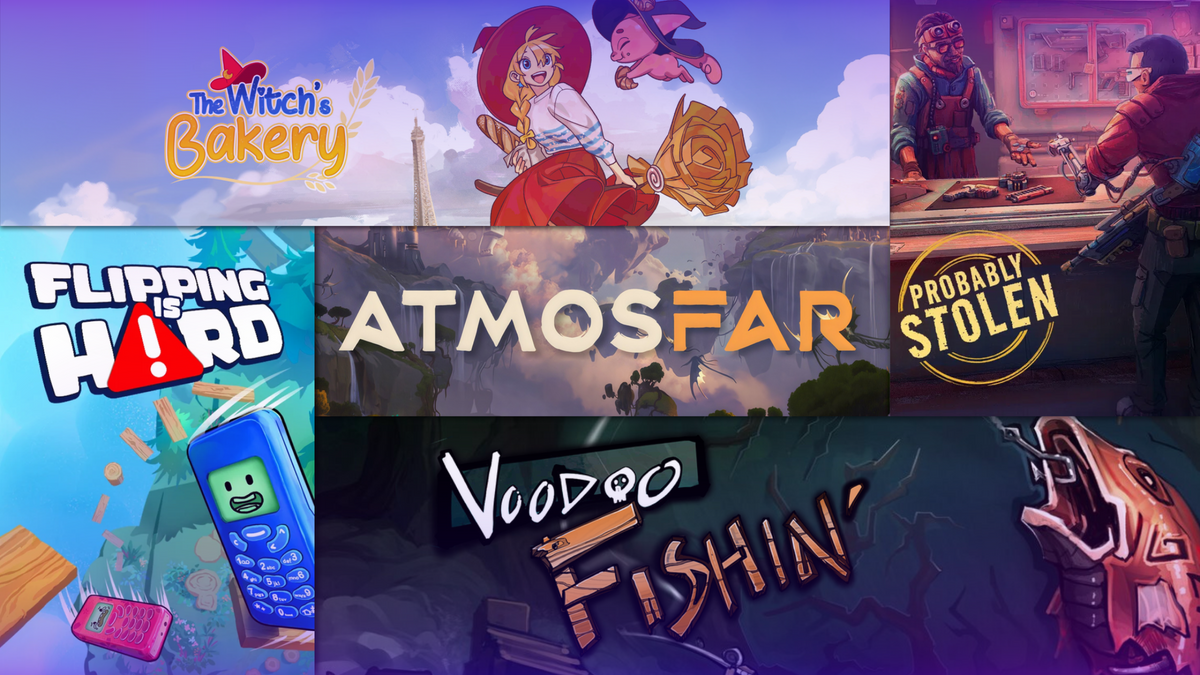
And while we’re talking about games worth making room for, this week’s Mega Cat-alogue features five more titles to keep on your radar: Fallen Tear: The Ascension, TOEM 2, Frutiger Home, Chromascape, and Wizard Harder Or Get Laid Off.
This lineup takes us from a hand-drawn Metroidvania and a cozy photography adventure to a glossy early-internet dream home, a color-based puzzle platformer, and a wizard trying to rebuild his life after getting laid off. That's quite a range for one week.
If you'd like a closer look at what makes these games stand out, along with even more indie discoveries, check out the latest Mega Cat-alogue here.
So… How Big Does a Game Need to Be?
We're heading toward an interesting middle ground. AAA games can continue delivering enormous experiences, while smaller teams can compete by doing something different. Focused games, shorter sessions, strong hooks, lower prices, more experimentation, and more personality all have room in the industry.
The future doesn't have to be about making games bigger. It can be about making them better at being themselves. Because a game doesn't need to be the biggest thing on Steam to stick with you. Sometimes, it just needs one really good idea and the discipline to build around it.
So here's the question: would you rather play a 100-hour game with everything, or a five-hour game that does one thing incredibly well?
There's room for both.
And maybe that's the real takeaway. You don't need a massive team or an enormous budget to make something people care about. You need an idea worth building, and enough focus to know when you've built enough.
Watch the video here: